
Template
Free Site Inspection Checklist for Construction Safety
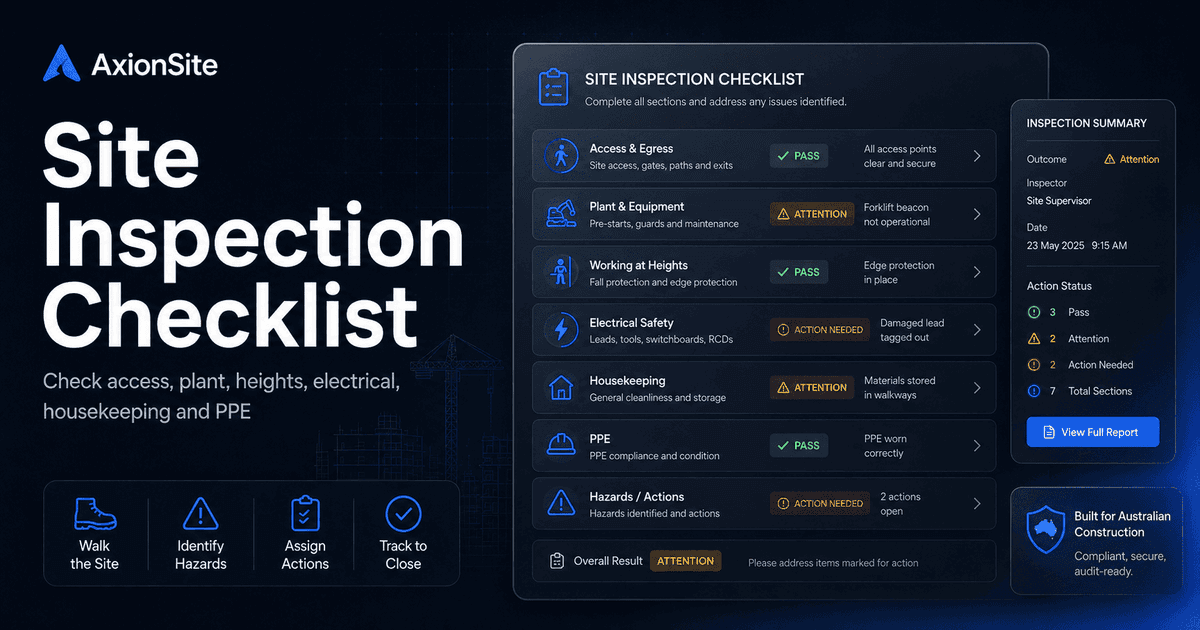
Field inspection headings for site conditions, access, plant, heights, electrical, housekeeping, PPE, hazards and sign-off.
Download a printable copy
PDF for toolbox or site records, Word for adapting fields to your IMS or client requirements.
Complete the security check to enable downloads.
Inspections are leading indicators: they find failed controls before someone gets hurt. This checklist is a pragmatic walk-around skeleton — extend items to match your trade and client rules.
Who this helps
Supervisors, dedicated inspectors and principal contractor representatives covering daily or weekly site tours.
What this checklist is for
A site inspection checklist should prompt consistent observation without hiding the inspector’s judgement. It helps identify failed controls, recurring themes and actions that need owners before they become incident investigations.
How to use it
Walk the site with the work sequence in mind, not just the checklist headings. Record failed items with photos where practical, assign corrective actions with due dates, and review trends across inspections so leadership can see systemic issues.
This version is structured as a practical construction walk-around: start with management documents and access, then inspect physical controls such as housekeeping, heights, plant, electrical, excavations, hazardous work, emergency readiness and corrective actions.
1. Inspection details and site management
- Inspection date, time, site/project, weather and work areas inspected are recorded.
- Inspector name, role and accompanying supervisor/HSR/contractor representative are recorded.
- Current WHS management plan / site safety plan is available where required for the project.
- Current SWMS are available for high-risk construction work being performed today.
- Workers and visitors observed on site appear inducted and authorised for the work area.
2. Access, egress and site security
- Site entry points are controlled, signposted and suitable for authorised access only.
- Perimeter fencing, gates and locks are secure, including after-hours arrangements.
- Emergency access routes, walkways, stairs and exits are clear and unobstructed.
- Temporary stairs, ramps, ladders and platforms are stable, secured and in good condition.
- Public interface controls are in place for pedestrians, neighbours, tenants or road users.
- Traffic routes separate people, mobile plant and deliveries as far as practicable.
3. Housekeeping, slips/trips and amenities
- Work areas, access ways and emergency routes are free from loose materials, trailing leads, protrusions and trip hazards.
- Waste is contained, segregated where required and removed before it blocks work or escape routes.
- Materials are stacked/stored to prevent collapse, rolling, falling or unauthorised access.
- Spills, mud, dust and slippery surfaces are controlled.
- Lighting is adequate for the work being performed and for access/egress.
- Toilets, drinking water, hand washing and meal/amenity areas are available and usable.
4. Working at heights and fall prevention
- Unprotected edges, floor penetrations, voids and shafts are guarded, covered, labelled or barricaded.
- Scaffolds, mobile scaffolds and work platforms appear complete, tagged/inspected and used within design limits.
- EWPs have pre-start checks, emergency lowering arrangements and competent operators.
- Ladders are industrial rated, secured, used for short-duration suitable tasks and not set up near edges or openings.
- Harness/fall-arrest systems have anchor points, inspection records and rescue arrangements where used.
- Weather/wind conditions have been considered for roof, scaffold, EWP and crane-related work.
5. Plant, tools and lifting operations
- Plant pre-starts, guarding, alarms, lights, mirrors/cameras and serviceability checks are current.
- Defective plant/tools are tagged out, isolated or removed from service.
- Mobile plant exclusion zones, spotters and communication methods are in place where people may interact with plant.
- Operators hold required licences/competencies for forklifts, cranes, EWPs, loaders or other high-risk plant.
- Lifting gear, slings, shackles and hooks are inspected, rated and protected from damage.
- Crane/lifting areas consider ground conditions, overhead services, suspended loads and public/worker exclusion zones.
6. Electrical safety and services
- Temporary boards, RCDs and electrical supply arrangements are protected from damage and weather.
- Leads and portable electrical equipment are inspected/tested/tagged according to site procedure.
- Leads are routed to avoid trip hazards, water, sharp edges, crushing and vehicle/plant movement.
- Isolation/lockout controls are in place for energised plant, services or electrical work.
- Overhead powerline approach distances, spotters and no-go zones are controlled where relevant.
- Underground services information is available before drilling, cutting, coring or excavation.
7. Excavations, ground openings and underground services
- Excavations, trenches, pits and open penetrations are barricaded, signed or covered against falls.
- Service locating / permit-to-dig / dial-before-you-dig evidence is available where ground is disturbed.
- Shoring, benching, battering or trench shields are in place where required by depth, soil or adjacent loads.
- Spoil, plant, vehicles and materials are kept back from excavation edges.
- Safe access/egress is provided for trenches or excavations workers enter.
- Water ingress, ground movement, vibration and nearby structures are monitored where relevant.
8. Hazardous substances, dust, noise and hot work
- SDS and labels are available for hazardous chemicals used or stored on site.
- Chemicals, fuels and gas cylinders are stored upright, secured, segregated and protected from ignition/impact.
- Dust, silica, asbestos or other airborne contaminant controls are in place where cutting, grinding or disturbance occurs.
- Respiratory protection, ventilation, wet methods or extraction are used where required by the task.
- Noise controls and hearing protection are in use for noisy work areas.
- Hot work has spark control, fire watch, extinguishers and permit controls where required.
9. Emergency readiness, first aid and PPE
- Emergency contacts, site address/location and muster point are displayed and understood.
- First aid kit, trained first aider and emergency equipment are available and accessible.
- Fire extinguishers are accessible, in date and suitable for site hazards.
- Rescue arrangements are defined for height work, confined space, excavation, water or remote work where relevant.
- Required PPE is worn and suitable for the task, including eye, hand, foot, hearing, respiratory or high-visibility protection.
- Incident, near miss and hazard reporting process is known by workers observed on site.
10. Actions, close-out and sign-off
- Failed items are photographed or described clearly enough for someone else to understand the issue.
- Each corrective action has an owner, due date, priority and temporary control if work continues.
- Serious or uncontrolled risks are escalated and work is stopped or isolated until made safe.
- Repeat findings are flagged for management review, toolbox talk or SWMS revision.
- Inspection report is distributed to relevant supervisors/contractors and stored in the project record.
- Inspector sign-off, date/time completed and close-out verification method are recorded.
Pair with: Hazard report template.