
NSW SWMS Fines: On-the-Spot Penalty Notices Explained (2026)
SafeWork NSW can issue on-the-spot penalty notices for SWMS breaches — amounts vary by offence under the WHS Regulation 2025. Triggers, PIN vs prosecution, real cases and evidence that holds up.
Quick answer: In New South Wales, SafeWork NSW inspectors can issue penalty infringement notices (PINs) for specified WHS offences on site — including SWMS-related breaches on construction projects. PIN amounts vary by offence and have increased under recent reforms: the Work Health and Safety Amendment (Penalty Notices) Regulation 2024* raised many notices by 24% from 1 July 2024, and the Work Health and Safety Regulation 2025 (NSW) (commenced 22 August 2025) sets current Schedule 18A amounts for regulatory offences. Examples in 2025–2026 commonly range from hundreds to several thousand dollars for individuals and roughly $2,700–$20,000 for corporations depending on the provision — always verify the current Schedule 18A for the exact offence. PINs are immediate financial consequences without a court hearing, distinct from prosecution where penalties can reach millions*.
This guide explains what triggers SWMS enforcement, how PINs differ from prosecution, recent case patterns, and the evidence regulators expect when they arrive unannounced.
The enforcement shift: visible, immediate consequences
The Work Health and Safety Amendment (Penalty Notices) Regulation 2024* (NSW) expanded and increased on-the-spot fines from 1 July 2024. SafeWork NSW's Building and Construction Work Health and Safety Blueprint to 2026 targets falls from heights, electrical contact and moving plant — SWMS compliance is a standard inspection element* in each priority area.
For PCBUs, the message is clear: "We have a SWMS somewhere" is no longer a defensible posture when an inspector compares the document to work on the tools.
SWMS offences inspectors check for
Under Part 6.3 of the WHS Regulations (harmonised framework, remade in NSW in 2025), key SWMS duties include:
| Duty holder | Core obligation |
|---|---|
| PCBU carrying out HRCW | Prepare SWMS before work starts; ensure work is carried out in accordance with it; review when controls change |
| Principal contractor | Take all reasonable steps to obtain a copy of the SWMS before HRCW commences |
| Workers | Follow the SWMS; stop if work cannot be performed in accordance with it |
Swipe to see all columns →
PIN-eligible offences sit alongside improvement and prohibition notices. An inspector who finds high-risk construction work proceeding without a compliant SWMS, or work clearly not in accordance with the SWMS, can act on the spot.
SWMS-related PIN amounts (2025–26 financial year)
Schedule 18A of the Work Health and Safety Regulation 2025* (NSW) sets fixed PIN amounts by offence tier. With the penalty unit value at $123.31 from 1 July 2025 (indexed annually under s 242B of the WHS Act), key construction SWMS* provisions include:
| Provision | Offence (summary) | Individual PIN | Body corporate PIN |
|---|---|---|---|
| Reg 299(1) | Fail to prepare SWMS before HRCW | $9,002 (73 PU) | $44,885 (364 PU) |
| Reg 300(1)–(2) | Fail to ensure work carried out in accordance with SWMS | $9,002 (73 PU) | $44,885 (364 PU) |
| Reg 312 | Principal contractor — fail to obtain SWMS before HRCW | $5,302 (43 PU) | $26,758 (217 PU) |
| Reg 309(1) | Fail to prepare WHS management plan (projects ≥ $250k) | $9,002 (73 PU) | $44,885 (364 PU) |
Swipe to see all columns →
Amounts index each July with CPI — verify current Schedule 18A before relying on figures in contracts or board papers. Multiple PINs can be issued for distinct offences on one visit.
The Work Health and Safety Amendment (Penalty Notices) Regulation 2024* also added 88 new PIN offences from 1 July 2024 (24% increase on existing tiers), including additional Chapter 6 construction* clauses — inspectors have a broader on-the-spot toolkit than pre-2024.
NSW enforcement context in 2026
SafeWork NSW's Building and Construction WHS Blueprint to 2026 sets explicit targets:
A 2023–24 Work at Heights in Construction evaluation found unsafe practices remain unacceptably common — including scaffolds with missing components, SWMS not matched to work, and harness plans without rescue procedures. Scaff Safe compliance campaigns continued through 2024–2025.
From 1 July 2026, section 26A of the NSW WHS Act makes approved codes of practice legally enforceable — PCBUs must follow the relevant code or prove an equivalent or higher standard. That includes the Managing the Risk of Falls at Workplaces and *Construction Work codes — SWMS adequacy will increasingly be measured against code benchmarks*, not only bare regulation.
PIN amounts vs prosecution — why both matter
Penalty infringement notices are designed for speed and deterrence — pay or contest through the administrative process. Amounts are fixed per offence in Schedule 18A of the current NSW Regulation (not negotiated on site). The WHS Amendment Act 2023 (NSW) also introduced annual indexation of penalty units tied to CPI — so PIN and maximum court penalties rise over time without a new Act each year.
Do not confuse PINs with maximum court penalties. For example, failing to ensure work is carried out in accordance with a SWMS (Reg 300) carries PIN amounts under the 2025 Regulation that differ from older $3,600 / $18,000 figures still quoted in legacy marketing materials. Principal-contractor obtainment offences and compliance-with-SWMS offences may have different PIN tiers. Check the current instrument or SafeWork NSW guidance for the offence you care about.
Prosecution under the WHS Act carries far higher maxima — Category 2 offences can reach multi-million-dollar corporate fines depending on indexing and circumstances.
Recent NSW construction prosecutions illustrate the gap:
The pattern across cases: courts treat generic, untailored or ignored SWMS as evidence of systemic failure, not a paperwork oversight.
What "compliant" looks like on inspection day
SafeWork NSW's own SWMS guidance (aligned to the 2025 Regulation) expects:
If work is not being carried out in accordance with the SWMS, work must stop immediately or as soon as safe; the SWMS must be reviewed before resumption.
Generic templates are an aggravating factor — not a defence
Safe Work Australia permits a generic SWMS as a starting point for repeated activities — but it must be reviewed and adapted to site-specific circumstances (Reg 299(3): "circumstances at the workplace").
Inspectors and courts consistently penalise:
Practical steps to reduce PIN and prosecution risk
FAQ
Can I challenge a PIN? Yes — PINs have an administrative review/contest pathway. Paying is not an admission of guilt for prosecution purposes, but unpaid PINs escalate through enforcement. Seek legal advice for serious matters.
Will inspectors always warn before a PIN? No. Schedule 18A offences are designed for immediate financial consequences — improvement notices may still be issued alongside or instead of PINs depending on risk.
Is a digital SWMS on a phone acceptable? Yes, if readily accessible to workers at the workplace (Reg 299). "At head office" fails the test.
Does a generic SWMS ever satisfy Reg 299? Only as a starting point for repeated activities — it must be reviewed and adapted to site-specific circumstances. Inspectors treat unmodified templates as non-compliance.
AxionSite: the evidence stack inspectors actually want
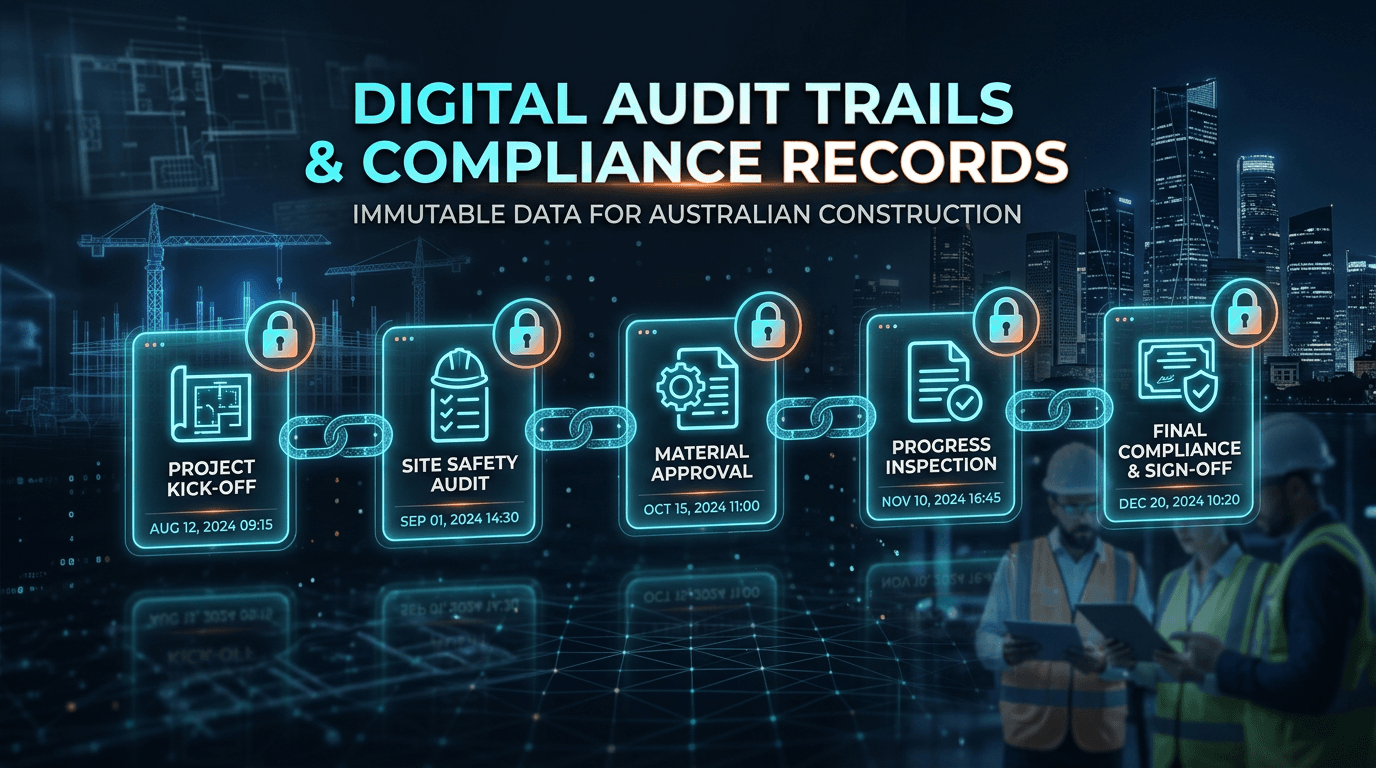
PINs and prosecutions both ask the same question: can you prove what was planned, communicated and controlled on the day? AxionSite is the connected answer — site-specific SWMS, timestamped sign-ons, and every register in one audit-ready workspace.
Teams on AxionSite stop scrambling for folders when an inspector arrives — the record trail is already there.
Sources
Ready to automate your WHS compliance?
Watch the short walkthrough on our AxionSite product page—the same flow from site details through SWMS generation, sign-off, PDF export, and crew sign-on—then start your trial when you’re ready.