
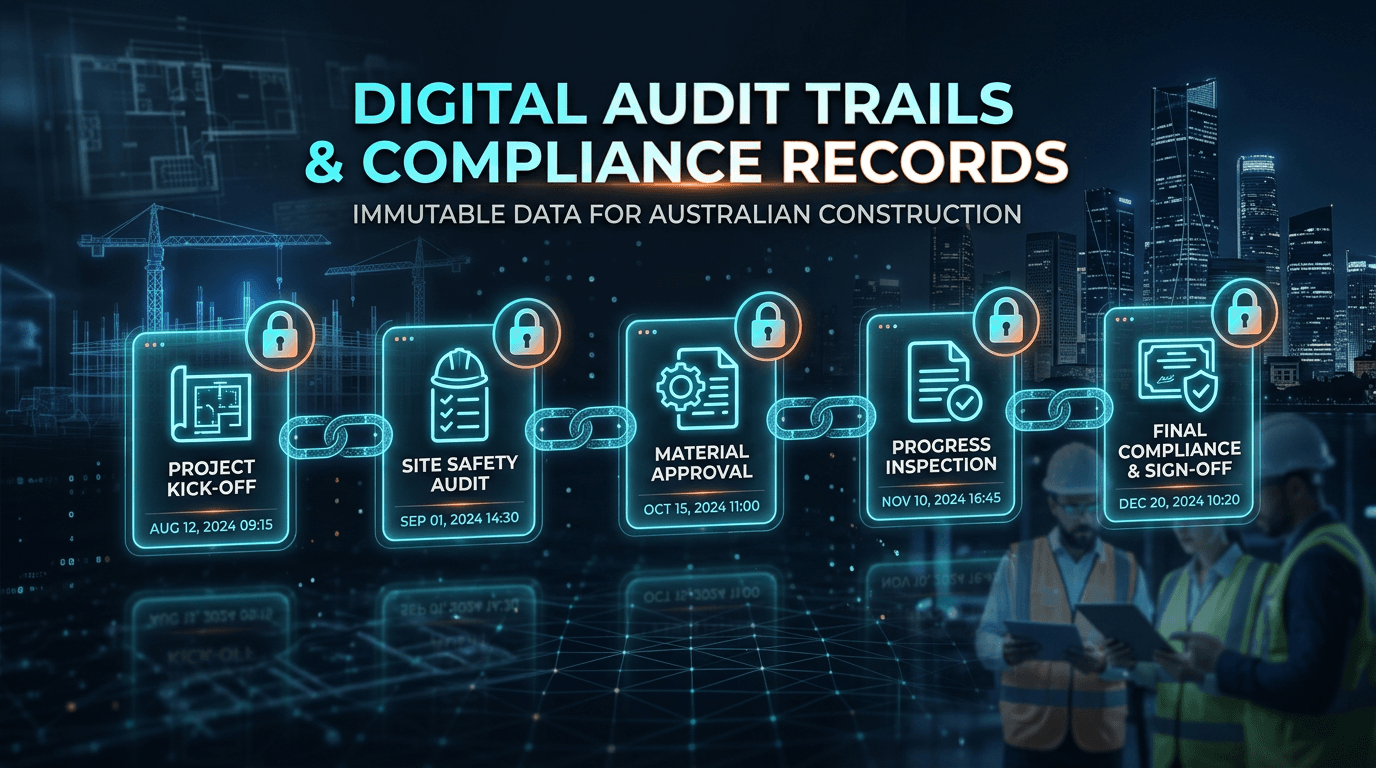
Why Digital Audit Trails Are the Future of WHS Compliance
Paper records fail during investigations. Digital audit trails, NSW SWMS penalty notices, timestamped sign-on and defensible WHS record-keeping explained.
When a regulator arrives on your site after a notifiable incident, the first thing they ask for is records. Not intentions, not policies — records. Who was on site? What permits / authorisations were in effect? Who signed onto the current SWMS? When? Paper-based systems routinely fail this test — and in NSW, inspectors can issue on-the-spot penalty infringement notices for specified SWMS and WHS Regulation offences (NSW SWMS fines guide; amounts vary by offence under the current Schedule 18A).
The record-keeping requirements
Under the model WHS Regulations, PCBUs must keep the following records:
Failure to maintain adequate records is itself a breach — and during a prosecution, the absence of records is treated as absence of the safety measure.
Why paper fails
Tampering. Paper records can be altered after an incident. Digital systems with a timestamped audit trail — where entries are attributed and client update/delete is denied for org audit-log entries under Firestore rules, and enterprise audit exports support SHA-256 verification — reduce this risk and preserve a clear activity history.
Loss and damage. Site offices flood. Folders get lost between projects. A single misplaced sign-on sheet can undermine an otherwise strong safety record.
Delayed entries. Paper sign-on sheets are often completed in bulk at the end of a shift — if at all. Real-time digital sign-on (via QR code or mobile app) captures the actual time a worker acknowledged the SWMS and commenced work.
Search and retrieval. When a regulator requests permit, SWMS, and sign-on records for a specific worker across all sites in the past 12 months, a paper-based system requires days of manual collation. A digital system returns results in seconds.
What a robust digital audit trail looks like
An effective WHS audit trail records:
For Australian WHS compliance, the audit trail should also capture:
Data residency matters
For Australian businesses, WHS records should be stored within Australian borders. Data residency on servers located in Australia helps meet expectations under the Australian Privacy Act 1988 and satisfies many procurement requirements for government and enterprise clients.
The investigation advantage
In the event of a WorkSafe investigation or coronial inquiry, a complete digital audit trail demonstrates:
This level of evidence can mean the difference between a successful defence and a prosecution under Sections 31-33 of the model WHS Act, which carry penalties up to $3 million for a body corporate and up to 5 years imprisonment for individuals in the most serious cases.
The transition from paper to digital isn't just about efficiency — it's about building a defensible record of your safety management system that holds up when it matters most.
Ready to automate your WHS compliance?
Watch the short walkthrough on our AxionSite product page—the same flow from site details through SWMS generation, sign-off, PDF export, and crew sign-on—then start your trial when you’re ready.