
Confined Space Entry in Australia: Entry Permits, Atmospheric Testing, and Rescue Plans
Confined space work is among the highest-risk activities on any site. Learn about statutory entry permits, atmospheric monitoring, and emergency procedures under Australian WHS law.
Confined space incidents often involve multiple fatalities — rescuers entering without proper equipment account for a significant portion of confined space deaths worldwide. The Australian regulatory framework for confined space work is designed to prevent these cascading tragedies.
What is a confined space?
Under the model WHS Regulations 2011 (Regulation 5), a confined space is an enclosed or partially enclosed space that:
Common examples include tanks, vats, silos, pits, pipes, ducts, flues, chimneys, cool rooms, ceiling voids, and sewers.
Statutory entry permit (Regulation 67)
The law requires a confined space entry permit to be issued on site before any worker enters a confined space (Regulation 67). That permit is issued by a competent, authorised person — compliance software can help you document the fields and checks that belong in the SWMS and pack, but it does not replace issuing and signing the actual entry permit for the shift.
The permit must include:
The permit must be kept at the workplace while work is being carried out and retained for at least 28 days after completion.
Atmospheric testing
Atmospheric testing is mandatory before entry and must be continuous during occupation (Regulation 72). Test for:
Gas detectors must be bump-tested before each use and calibrated per the manufacturer's specifications (typically every 6 months). Results must be recorded on the entry permit.
Standby person and rescue
A trained standby person must remain outside the confined space at all times during entry (Regulation 74). They must:
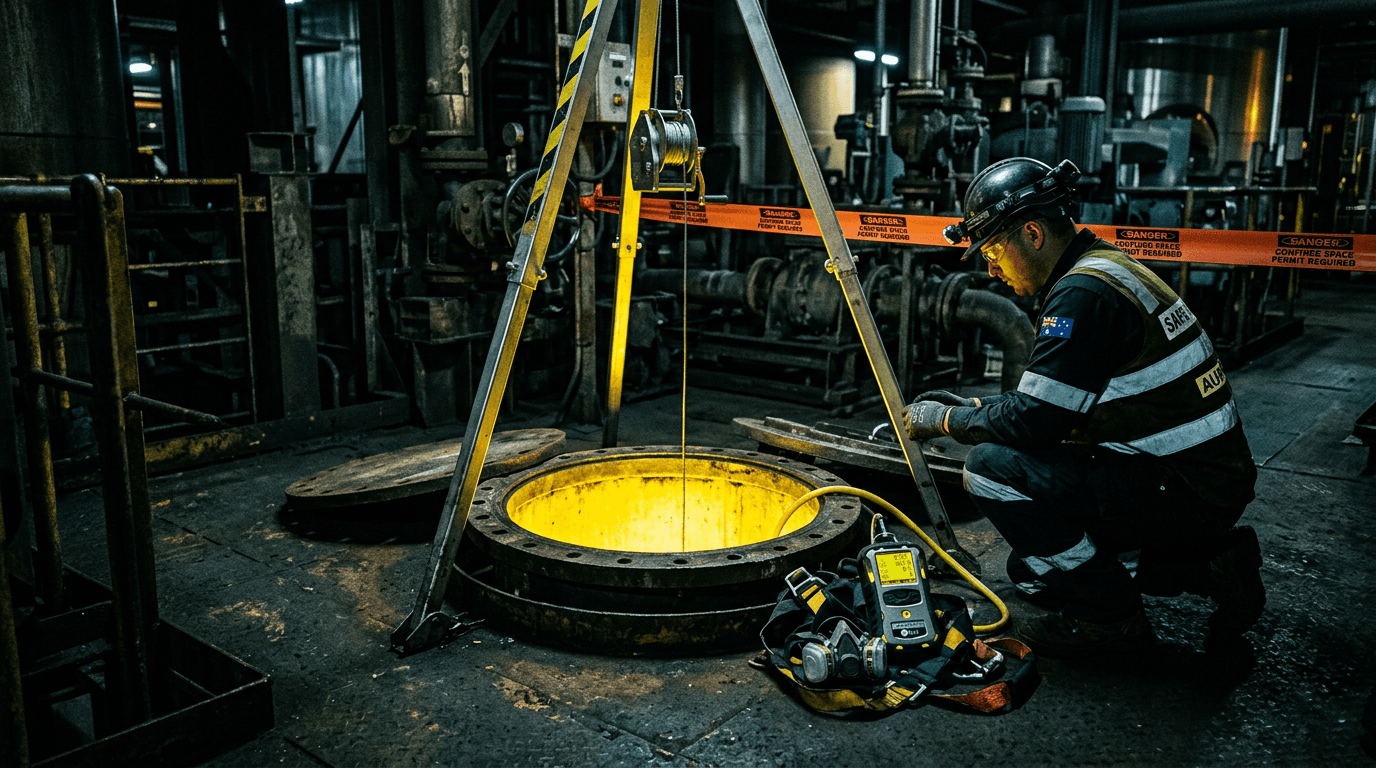
A rescue plan must be prepared, tested, and documented before entry. Rescue equipment — self-contained breathing apparatus (SCBA), retrieval systems (tripod and winch), and first aid equipment — must be available at the entry point.
Training and competency
Workers entering or working around confined spaces must be trained and assessed as competent. Relevant competency units include:
The standby person must be competent in the emergency and rescue procedures specified in the confined space entry permit.
Common compliance failures
Regulator investigations consistently find:
Digital systems that enforce mandatory checklist fields (atmospheric readings, standby person name, rescue plan acknowledgement) — and block sign-off until requirements are complete — can prevent the most common failures before they reach the site. That is different from “generating” a government or site permit: the pack should reflect what Reg 67 requires; the authorised issuer still controls the live entry permit.
Ready to automate your WHS compliance?
Watch the short walkthrough on our AxionSite product page—the same flow from site details through SWMS generation, sign-off, PDF export, and crew sign-on—then start your trial when you’re ready.